

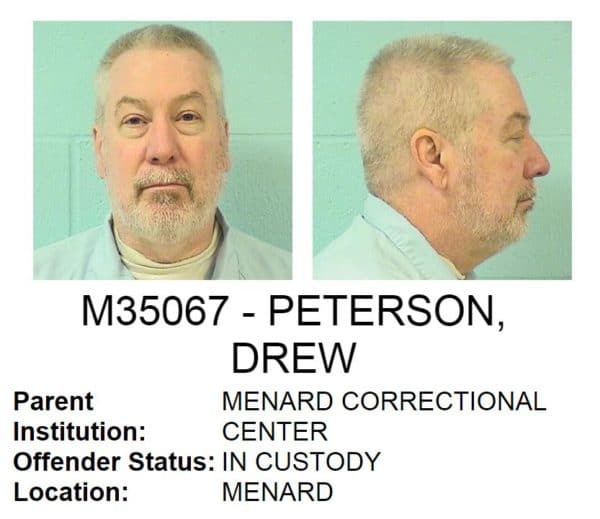
Drew Peterson
Behavioral Analysis of his Matt Lauer Interview
Stan B. Walters
“The Lie Guy®”
Cop Drew Peterson was interviewed by Today Show’s Matt Lauer
and I’ve already had some media asking about Peterson’s
behaviors.
Here are a few quick things I noticed.
1. Drew Peterson’s body language is pretty controlled. That in itself
could be a sign of stress but Peterson is pretty confident and
should have plenty of experience in the hot seat as an interviewer
and testifying in court so I’m not surprised. He does appear by his
posture to exhibit a certain amount of arrogance. But that in itself
does not mean he is being deceptive. I did pick up the “stress
clicking” from his tongue and cheeks being dry from stress. This
is a physiological change but NOT and indicator of deception. He
may be calm and controlled on the outside, BUT he may be
undergoing some severe internal stress.
2. When Drew Peterson as asked in the relationship with his wife was
violent Peterson responded with an “I don’t know” answer and also
said “I don’t believe it was ever violent.” In my opinion that’s a
cluster of behavior consistent of someone withholding information.
He was asked if he ever hit her but there was no camera on him at
the time of his response. He does blame her for hitting him with a
steak. (That’s gotta be a felony!)
3. When Lauer asked if she told him there was another man he
responded that she didn’t tell him there was another man but then
said “Well, maybe she did” and he quotes her as saying she found
someone else. He has to come up with that because his whole
defense is that she has run away with someone else.
4. When Drew Peterson was asked if his wife was a good Mom he
responded very positively. In fact he called her a “great Mom.”
When asked why a great Mom would disappear and not call to
check on her young children or let them know she was okay all
Peterson could come up with was “I don’t know. I can’t explain
that.”
5. Peterson was asked about the death of his 3rd wife and the fact
he was on the scene, did it look like an accidental drowning to
him. Peterson responded “I didn’t know if she was dead or alive. I
felt her pulse and being a policeman I left things alone.” Notice he
didn’t answer the question.
(Just as an aside. Savio’s death was
ruled as an accidental drowning although the bath tube was empty,
she had a one inch cut on her head and her hair was matted with
blood. If she was drowning in the tub, wouldn’t the water soak the
blood out of her hair? Further she would already be dead if and
when the water drained out of the tub. How could she bleed more
after being dead? I’m not a crime scene expert, BUT….)
6. I find it interesting that Peterson blames both women for the
problems they had in their relationships. It’s amazing how often it’s
the victim’s fault. He blames the problems with BOTH women as
being a result of their menstrual cycle. Uh huh…
7. One REAL big telltale sign that caught my attention. He
obviously talks about Savio in past tense – she’s dead. BUT he
also talks about Stacy in past tense but she’s supposed to have
run away with another man! He talks about that she “would” ask for
a divorce or she “used” to do something. In my opinion in his
mind he believes she’s dead.
8. When Lauer asks if Peterson is surprised that he is a suspect,
Peterson responds that the husband is always the suspect and
when would he not be one. Yep, let’s all ignore the elephant in the
room but act like it’s not unusual for it to be there. This appears to
be one of our guilt phrases we learn about in class.
9. When asked why Stacy’s sisters said she wanted to get away
from him and if she didn’t call to start looking for her, Peterson
blames the media for putting the idea in her head and then brings
up Geraldo Rivera.
10. When he was read the email that Stacy wrote to her sisters,
he said it’s a fake, just like the rest of the stuff. Just like the blood
was planted at OJ’s crime scene and house. Must be a
conspiracy. More evasion by Peterson using Anger.
11. Drew Peterson had an AMAZING response when Lauer mentioned
that if tried and convicted Peterson could get life or even the death
penalty. Peterson acts like he’s made his peace and is ready to
go! Talks about his kids will be taken care of and everything will
be fine. Sounds like a terminal cancer patient preparing to die! In
my opinion this is an act on his part to show I’ve not afraid of
anything!
12. Now I find it interesting that all this happened just at the point
she was going to start or had started divorce proceedings. I can’t
imagine why that would not be some kind of motive for him!
13. Finally (interesting that this is the 13th point) and this one is
big to me, Peterson said “she is where she wants to be.” Well if
she wanted to be away from him wouldn’t “dead” be a way to be
where she wants to be – “away” from him. I find that a very telling
statement.
Now, do yourself a favor. Google the name Sam Parker. Parker
is a 26 year cop in Walker County Georgia whose wife has been
missing since March 2007. Find and watch the full video interview
of him by FOX in Atlanta. See if this story sounds familiar. He
says his wife is actually hiding somewhere. He claims she has run
off with someone and has been caught in an affair. They was just
getting a divorce and he was to pay her $20,000 the day she
disappeared. He blames the media, Cops and FBI for all the
hysteria around his case. Sounds familiar? There must be a
common script these 2 guys used.
In terms of Matt Lauer’s interview. He did fine considering what he
had to work with. I’m not at all a big fan of Matt Lauer but I imagine
there were some pretty strict ground rules about what Matt could
and could not ask.
Watch this case. It would be interesting to see how the new
autopsy comes out on Savio. I’d be interested in any more
statements Peterson makes although I doubt he’ll talk anymore.
Love to hear your comments!
Stan
Stan@TheLieGuy.com
www.TheLieGuy.com
TheLieGuyAcademy.com
Upcoming Virtual Classes
Learn Effective Interview Techniques: On-Line Course
Facebook
Twitter
LinkedIn