
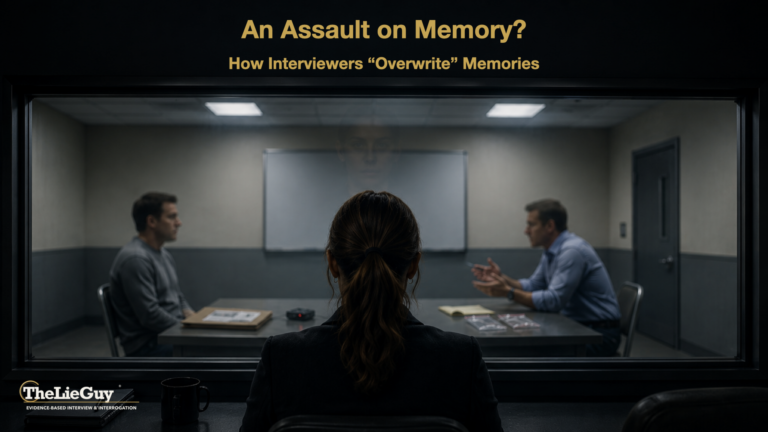
How Interviewers “Overwrite” Memories
Most investigators would never dream of handling physical evidence carelessly. A weapon is packaged. DNA is protected. Digital evidence is preserved. Yet one of the most fragile forms of evidence in any investigation is often treated far less cautiously: human memory. Memory is not a permanent recording waiting to be replayed on command. It is reconstructive, vulnerable to suggestion, and influenced by information encountered after an event. That means the interview itself can change what a person later remembers. The uncomfortable question is this: What happens when the interviewer becomes the source of that new information?
Memory Is Reconstructive, Not Recorded
Human memory does not function like a body-worn camera. Each time a person recalls an event, the memory is reconstructed from pieces of stored information, expectations, later experiences, and information encountered after the event. That is why seemingly small details introduced during an interview can matter. A suggestion does not have to be blatant to influence recall. A question that assumes a fact, supplies a missing detail, or repeatedly presents one version of events can become part of the witness’s later reconstruction. Eventually, the person may no longer distinguish between what was originally experienced and what was learned during the interview.
The Interviewer Can Become Part of the Evidence
This is where interviewing technique becomes an evidence-preservation issue. Investigators routinely protect a crime scene from contamination, yet contamination can also occur conversationally. Leading questions, premature disclosure of case facts, repeated challenges, or telling a subject what “must have happened” can introduce information that was never part of the person’s original memory. Once that information has been incorporated, later statements may appear more detailed and more confident—but increased detail and confidence do not necessarily mean increased accuracy. The interviewer may have unknowingly helped create the very statement later relied upon as corroboration.
Better Questions Protect the Record
The solution is not to avoid probing an account. Investigators still have to test information, resolve inconsistencies, and pursue details. The difference is in sequencing and discipline. Begin with open invitations and allow the person to generate the account before supplying information. Separate what the person independently recalls from what the investigator already knows. When clarification is necessary, ask questions that retrieve information rather than plant it. The goal is not simply to obtain a statement. It is to preserve a record that allows investigators, prosecutors, defense counsel, judges, and jurors to determine where the information actually came from.
Protect Memory Like Evidence
A contaminated fingerprint does not become reliable because it appears persuasive. Neither does a contaminated memory. Once information has been introduced into a person’s account, it may be impossible to determine with certainty whether a later detail originated with the witness or with the interviewer. That is why disciplined interviewing matters from the first question forward. Physical evidence is packaged, protected, and documented because investigators understand how easily it can be compromised. Human memory deserves the same caution. The interview should recover evidence—not become the source of it.
© Copyright 2026 by Stan B. Walters. All Rights Reserved.
Brief excerpts may be quoted with attribution and a link to the original article. Reproduction, redistribution, or use in training materials requires written permission.